Workplaces seldom plan to check their emergency situation systems on a negative day, yet that is specifically when they matter. A good fire warden steadies the room, reads the dangers, and obtains people moving. The formal training behind that calm is structured, examined, and country wide recognised in Australia via devices like PUAFER005 and PUAFER006. Whether you are building an emergency control organisation in a skyscraper or standing up a tiny group for a regional warehouse, the right training course develops judgment, not simply knowledge.
What the job really looks like on the ground
Titles can make it sound ceremonial, but a fire warden lugs practical responsibilities that start well prior to an alarm. Day to day, you inspect leaves, expect blocked egress courses, and note who needs help throughout an action. When a case starts, you validate the sharp, connect directions without irritating panic, and sweep your zone. After the all-clear, you aid with headcounts and reports, and you promote any changes that would make the following feedback smoother.
In bigger websites, the emergency situation control organisation remains on a simple power structure. Wardens run areas or floors, a chief warden collaborates the response, and a deputy steps in as required. Communications circulation in both directions. A chief wants 3 points promptly: what is happening, who is influenced, and what obstacles stand in the way of a discharge or lock-in-place technique. An experienced warden recognizes exactly how to give that in crisp language.
Where PUAFER005 fits
PUAFER005, formally titled Run as part of an emergency situation control organisation, is the common starting factor for wardens. The device instructs wardens to operate within the site's emergency situation procedures, which are usually developed from AS 3745 Planning for emergency situations in centers and, for health care, AS 4083. You learn your regional design, the occurrence kinds most likely to happen, communication procedures, and practical activities like releasing a fire blanket, separating tools, or guiding a person with low mobility to a refuge.
Competence is not simply recall of steps. The analysis anticipates you to demonstrate safe, lawful action in a simulated or genuine atmosphere. That can consist of recognizing an alarm system kind, making a public address statement, handling a small group towards exits, and reporting to the chief warden with the ideal details in the ideal sequence.
From experience, the strongest PUAFER005 courses avoid death-by-PowerPoint. They position you in a reasonable situation with sound, time pressure, and missing info, after that they debrief hard. You remember what you do, not what you read.
Where PUAFER006 fits
If you are tasked to lead during an occasion, PUAFER006 Lead an emergency control organisation improves the warden skillset. This is the chief warden course, created for those who will run the incident until emergency services take control of. You find out to interpret incomplete information, pick the most safe technique, assign wardens to tasks, control interactions, and make the call to leave, sanctuary, or partially relocate occupant groups.
Chief warden duties include launching and managing the response, communicating with first -responders, handling rises, tracking headcounts, and determining when to terminate the feedback. In technique, the chief fire warden is likewise the one that believes https://anotepad.com/notes/i3ndac6b 2 steps in advance regarding secondary hazards and company continuity after the prompt threat has passed.
Good PUAFER006 training drills judgment. In an actual event, alarm systems are occasionally incorrect, detectors stop working, and individuals get layers. The chief requires to exceed the script, use the strategy to messy fact, and maintain everyone aligned.
Fire warden training requirements and currency
There is no solitary rule that fits every sector, yet a number of concepts hold. Organisations usually choose and educate enough wardens to cover every occupied zone during operating hours, including shifts and leave. A harsh baseline is one warden per defined area or per 20 to 50 passengers, adjusted for design and risk account. High fire lots, public accessibility, or complex egress courses warrant more wardens.
Training must be site-specific. Generic course web content aids, yet the decisive factor in an emergency is familiarity with your structure and individuals. The best programs combine a country wide identified warden course with site inductions, sensible evac drills, and regular refreshers.
Competency currency commonly adheres to a 1 to 2 year cycle. Lots of insurers and regulators expect annual exercises at minimum, with official re-assessment in two years or earlier if the site or team adjustments considerably. Chief wardens benefit from even more constant method. A short fifteen-minute drill each quarter beats a long academic session once every three years.
What you will certainly learn, past the brochure
A training course description listings interaction treatments, discharge principles, and basic initial feedback techniques. The genuine worth originates from functional application, context, and judgment. Wardens should be comfortable with:
- Recognising alarm system phases and recognizing regional panel signs, including mistake and isolate conditions. Directing activity under stress and anxiety, consisting of just how to use voice and body language to cut through noise and hesitation. Identifying those that need aid, such as mobility device individuals or people with sensory level of sensitivities, and applying pre-planned strategies for risk-free emptying or refuge. Reporting details succinctly making use of accepted formats, as an example area, type of hazard, smoke participation, variety of people, and impediments.
Chief wardens add decision-making under uncertainty, entrusting and tracking wardens, method shifts when conditions change, and controlled intermediary with exterior responders. Expect to practise prioritising a life hazard over building, picking between full and staged evacuation, and handling contradictory inputs being available in over radio, phone, and face to face.
Assessment: what a qualified warden resembles on paper and in practice
Assessment for PUAFER005 and PUAFER006 need to show that you can apply understanding in reasonable conditions. RTOs make use of scenario-based efficiency jobs. For wardens, this may involve obtaining an alarm, checking your area, helping an occupant, interacting a record, and finishing post-incident documentation. For primary wardens, assessors seek command existence, clear tasking, approach choice, interaction self-control, and safe discontinuation of the incident.
Written components often cover legislative context, roles and duties within the emergency situation control organisation, alarm kinds, and discharge principles. Practical elements must include radio use, PA announcements, and a simulated discharge move. The much better providers develop complexity into circumstances, such as a blocked leave, a no-lift regulation for mobility-impaired individuals, or a head count variation that compels a re-check.
Do not be shocked if an instructor quits a circumstance to talk about a decision. The purpose is finding out first, compliance secondly. The debrief needs to ask what info you had, what you presumed, and what you will do in a different way following time.
Fire warden requirements in the workplace
A convenient program begins with threat assessment. You map floor designs, stairwells, havens, assembly areas, and alternative routes. You log the populace: employees, visitors, professionals, and any type of regulars that may need support. You consider the hazards: gas tons, lithium battery storage, hot work, kitchen areas, server spaces, plant areas, and the age or building and construction of the building.
From there, you make your emergency situation control organisation. You select wardens for each and every area and changes, mark a chief warden and deputies, and designate equipment. Modern method prevents relying on a single person, so build redundancy. Rotate roles in drills to grow depth.
Policy issues as well. Clear policies concerning utilizing lifts, safeguarding doors, shelter in place during external dangers, and when to re-enter the structure avoid improvisation in the wrong direction. Treatments should be brief, details, and tied to functions, not unclear narratives.
Hat colours and identification
Colours aid determine roles throughout a discharge. Conventions vary by market and area, yet in many Australian offices wardens wear red and the chief warden wears white. The usual shorthand is red for wardens, white for chief warden and replacement, and sometimes yellow for communications or emergency treatment roles. Some websites utilize headgears, others make use of caps, vests, or tabards. If your workplace makes use of safety helmets, the chief warden hat colour is generally white. Where the question is framed as what colour helmet does a chief warden wear, the safe response is white in many systems, however follow your site's recorded scheme. Uniformity beats tradition, and every occupant must understand the visual cues used on site.
Building the ideal training blend: class, drills, and site specifics
A reliable program mixes formal systems with site-based technique. The national devices give typical language and assessment rigor. Website drills transform that into muscular tissue memory. Start with a PUAFER005 course for wardens and PUAFER006 for primary wardens, after that include targeted sessions on your structure: how the fire indicator panel behaves, staircase pressurisation, door hold-open tools, hands-on call factors, and any kind of plant seclusion actions your staff may need to initiate under instruction.
Two brief drills a year are better than one grand occasion that no one remembers. Turn scenarios. One quarter, run a partial discharge on degree three with an obstructed main departure. An additional quarter, test after-hours treatments with a skeletal system group. Use observers to note traffic jams and capture timings from alarm system to very first motion, and from first activity to clear stairwells.
PUAFER005 training course: what to anticipate and how to prepare
A typical PUAFER005 course runs half a day to a complete day relying on the company and just how much website assimilation occurs. Anticipate a mix of theory and simulation. Trainers cover the emergency control organisation, functions and duties, alarm types, emptying routes, communications, and standard first feedback activities. They will likely consist of a useful component including a sweep, a report to the chief warden, and a debrief.
Preparation aids. Walk your location a day prior, check departure signage and doors, and keep in mind any type of visibility problems. If your office has individuals calling for aid, comprehend the plan for them. Bring your website procedures if permitted. During the course, deal with radios and PA announcements as skill sessions, not afterthoughts. Clear voice, short sentences, and confidence under stress are learned, not gifted.

PUAFER006 program: moving from doer to leader
The PUAFER006 course typically runs a complete day. The content changes from task implementation to management and coordination. You will certainly practice receiving records, picking a reaction technique, allocating wardens, and upgrading emergency solutions. Instructors often simulate information overload, conflicting reports, and unexpected problems. The analysis tries to find organized decision-making and regulated interaction, not heroics.
To obtain one of the most from chief warden training, show up with your site's specifics in mind. Know where the fire indicator requirements for chief wardens panel is and which areas map to which floorings. Understand assembly locations and their capability. Think through backups such as an obstructed main assembly area due to wind or web traffic, and an emptying that includes visitors who do not know the structure. Bring your deputy or successor if possible, so you construct shared mental models.
Certification and recognition
On successful completion of PUAFER005 or PUAFER006 with a Registered Training Organisation, you obtain a Declaration of Achievement noting the pertinent system. That certificate is across the country identified. Maintain digital and hard copies, and track expiration or refresher course dates for your group. Some markets preserve extra registers or website induction cards revealing warden status.
Certification signals competency, yet it is not a guard versus worsening. Team spin, restorations, plan changes, and brand-new hazards wear down performance. Deal with the certificate as a starting line. If something changes materially on site, run a short targeted exercise.
Fire warden course shipment modes and the trade-offs
Face-to-face training supplies the richest simulation, especially when provided on site. Instructors can integrate your building's traits and run drills in the real setting. Off-site class training benefits fundamental understanding, but it loses the benefit of place-based learning. Combined knowing can work: concept online, brief sensible sessions on site. The threat with pure online distribution is overreliance on recall and underdevelopment of sensible communication and leadership.
Shift work makes complex attendance. Take into consideration shocking sessions, or choose relief wardens for each and every change. Remote or multi-site organisations might centralise chief warden training and decentralise warden training, with a shared exercise calendar to keep everyone aligned.
Common blunders I see, and exactly how to avoid them
Many organisations stop at a policy document and a certificate. They do not practice. When the alarm goes, radios squeal, messages are garbled, and someone walks towards the smoke to check it out. One more regular issue is a strategy that presumes best world problems. During a real discharge, doors may reject to shut, stairwells might feel congested, and somebody will try to bring a bag or coffee. Your training should expect human actions and rubbing, not neglect it.
A second mistake is uncertain authority. If occupants do not understand to comply with wardens, or if managers countermand guidelines, the feedback pieces. A short briefing for all personnel after each drill, reiterating that does what, pays dividends.
Finally, flexibility preparation is commonly also unclear. Designate a buddy or team to each person requiring aid, agree on a method, and practice it. If your building has sanctuaries, see them. Know the path, the door swing, and the intercom.
Choosing a provider
Pick an RTO that teaches both PUAFER005 and PUAFER006, has trainers with actual occurrence experience, and wants to include your website procedures. Ask exactly how they analyze sensible skills, just how huge the class will certainly be, and whether they bring radios and technique right into the room. Good carriers customize situations to your risks, not just the common office fire.
If your website has specific hazards like battery energy storage systems, information facility suppression, or hazardous chemicals, tell the company. They should adapt content so wardens comprehend what a gas flooding system alerting ways, or just how to isolate an item of plant safely within their role.
Roles, hats, and communication discipline
Identification is just component of the puzzle. The real adhesive is communication technique. Keep networks clear. Use phone call signs if your site appoints them. Talk basically bursts, state your location first, after that the problem, after that the activity. Principal wardens ought to stand up to need to narrate. Request for status records by area, provide choices simply, and summarise periodically.
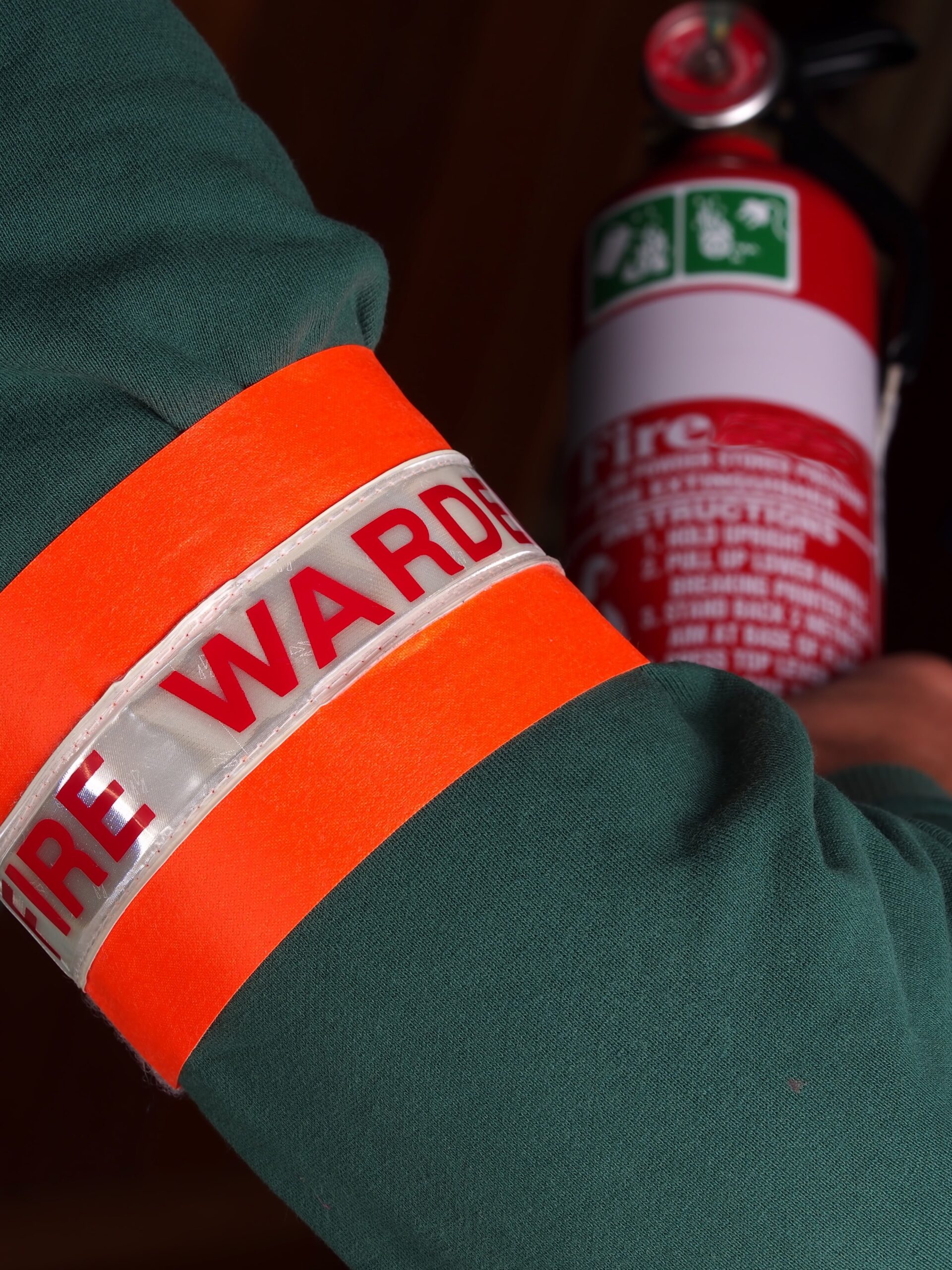
For physical identifiers, ensure your fire warden hats, caps, or vests are kept where they are very easy to get hold of and fit. With time, labels discolor and numbers peel off. Inspect quarterly. If your site utilizes a chief warden hat or safety helmet, keep it on a hook near the panel, not buried in a drawer.
Integrating very first action tools without mission creep
Wardens are not firemans. The line is basic: if it is safe, you may use a fire extinguisher or blanket to regulate a small incipient fire, however you never ever put yourself between the fire and your leave. Training must cover coordinating extinguisher type to danger and the PASS strategy. An excellent program will compel a decision factor: abandon the strike and return to discharge control if the fire does not respond immediately or conditions change.
Beware objective creep throughout drills where confident team linger to have fun with devices. Establish assumptions early. Life safety comes first, and the warden's prime obligation is people motion and details flow.
Documentation and constant improvement
After every drill or event, capture timings, barriers, and recommendations. Keep it short and particular. If a door dragged, log the door and flooring. If evac chairs were sluggish to deploy, set up a practice. If a headcount system fell short since paper checklists were outdated, repair the procedure or move to a real-time roster affiliation. Over a year, three tiny enhancements can cut in half evacuation time.

In regulated atmospheres, your documents sustains compliance and insurance. More importantly, it builds organisational muscle memory. The chief warden should assess findings with wardens and monitoring, appoint activities, and close them out prior to the following exercise.
Typical inquiries that show up in training
People inquire about elevators, animals, climate, and coffee. Elevators are generally out for fire evacuations, yet inspect your building's fire service lift treatments and do not improvisate. Pets are best attended to in policy before the day. Weather can be an actual concern; assign different setting up points and connect them. As for coffee and bags, prepare for it. A clear guideline at the start of an evacuation, leave belongings behind, reduces delays.
Another reoccuring inquiry is the fire warden hat colour. Keep it regular with your system and educate it during inductions. Chief warden hat colour is frequently white, wardens red. If your system differs, post a visual in common areas.
Bringing it all together: a useful pathway
- Nominate duties and map areas, consisting of chief warden, deputies, and relief wardens for shifts. Enrol wardens in PUAFER005 and principal wardens in PUAFER006, with site-specific assimilation where possible. Run a website induction for wardens that covers layout, equipment, and procedures, after that schedule a minimum of two drills a year with varied scenarios. Maintain identifiers, radios, and documents, and review after each workout with clear restorative actions. Refresh competency on a 1 to 2 year cycle, or sooner when site changes or personnel turn over demand it.
Final thoughts from the field
Great wardens are made via technique and clarity. The best principal wardens I have actually worked with were not the loudest; they were one of the most consistent. They requested for the appropriate details, made prompt decisions, and took care of their teams. Courses like PUAFER005 and PUAFER006 give the structure and confidence to act, yet the side comes from living the strategy in your building. When the alarm sounds and heads swivel, a qualified, rehearsed warden group is the difference in between complication and orderly activity. That is the peaceful objective of every warden course, and it is worth doing well.